Details
DRM: Adobe DRM
Weitere Details
1. Auflage 2023
24.10.2023
English
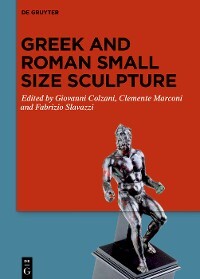
Greek and Roman Small Size Sculpture
eBook
Beschreibung
Über Giovanni Colzani, Clemente Marconi, Fabrizio Slavazzi
Inhalt
Table of contents as of December 22, 2020:
1. Fabrizio Slavazzi (University of Milan), Giovanni Colzani (University of Milan), and Clemente Marconi (New York University and University of Milan)
Introduction
2. Anna Anguissola (University of Pisa)
In parvolis marmoreis fama: Microsculpture in the Greek and Roman World.
3. Margherita Bolla (Verona, Archaeological Museum)
Il riposo di Mercurio. Esiti dell'iconografia del dio seduto nella piccola plastica in bronzo dell'Italia settentrionale.
4. Alessia Bonadeo (University of Pavia)
Scripta effigies: un esempio di interazione testo-immagine in Marziale e in Stazio.
5. Elena Calandra (Ministero dei Beni e delle Attività Culturali)
Miniaturizing Myth: The Case of the Niobids.
6. Giovanni Colzani (University of Milan)
Proximity, Tactility, Mobility: Graeco-Roman Statuettes and their Beholders.
7. Elisabetta Gagetti (University of Milan)
Coloured Hard-Stones in the Villa: Precious Sculptures from Residential Contexts in the Roman Empire.
8. Ralf von den Hoff (Freiburg, Albert-Ludwigs-Universität)
Alexander-Riders: Small Scale Portraits of Alexander the Great on Horseback.
9. Rosanina Invernizzi (Soprintendenza Archeologica della Lombardia)
Ercole fanciullo e i serpenti: leroe in piccolo in un bronzetto romano da Casteggio (Pavia).
10. Kenneth Lapatin (J. Paul Getty Museum)
Materials and their Meanings: An Iconological Approach.
11. Clemente Marconi (New York University and University of Milan)
Precious Little Votives: Early Classical Marble Statuettes from Selinunte in Context.
12. Maria Elisa Micheli (University of Urbino)
From the Big to the Small: The Case of the Athena Parthenos.
13. Olga Palagia (University of Athens)
Small-scale Marble Sculptures from Archaic and Classical Athens.
14. Eugenio Polito (University of Cassino)
Una copia ridotta dell'Eracle Epitrapezios: fra scultura ideale e ritratto.
15. Évelyne Prioux (Centre National de la Recherche Scientifique)
Small Is Beautiful: Praising Miniature Sculptures in Hellenistic and Roman Imperial Texts.
16. Fabrizio Slavazzi (University of Milan)
Gods and Heroes in the Furnishings: Opera Nobilia for Roman Marble Tables.
17. Giandomenico Spinola (Vatican Museums)
Il valore e luso della scultura romana in formato ridotto.
18. Michael Squire (Kings College London)
Sizing up Art: The Intermedial Semantics of Scale in the Hellenistic and Roman Worlds.
19. Tobias Wild (Freiburg, Albert-Ludwigs-Universität)
From Masterwork to Patchwork: On the Interrelation of Iconography and Production in Hellenistic Ruler Bronze Statuettes.
E-Book Informationen
Alle hier erworbenen E-Books können Sie in Ihrem Kundenkonto in die kostenlose PocketBook Cloud laden. Dadurch haben Sie den Vorteil, dass Sie von Ihrem PocketBook E-Reader, Ihrem Smartphone, Tablet und PC jederzeit auf Ihre gekauften und bereits vorhandenen E-Books Zugriff haben.
Um die PocketBook Cloud zu aktivieren, loggen Sie sich bitte in Ihrem Kundenkonto ein und gehen dort in den Bereich „E-Books“. Setzen Sie hier einen Haken bei „Neue E-Book-Käufe automatisch zu meiner Cloud hinzufügen.“. Dadurch wird ein PocketBook Cloud Konto für Sie angelegt. Die Zugangsdaten sind dabei dieselben wie die Ihres Kundenkontos in diesem Webshop.
Weitere Informationen zur PocketBook Cloud finden Sie unter www.meinpocketbook.de.
Allgemeine E-Book-Informationen
E-Books in diesem Webshop können in den Dateiformaten EPUB und PDF vorliegen und können ggf. mit einem Kopierschutz versehen sein. Sie finden die entsprechenden Informationen in der Detailansicht des jeweiligen Titels.
E-Books ohne Kopierschutz oder mit einem digitalen Wasserzeichen können Sie problemlos auf Ihr Gerät übertragen. Sie müssen lediglich die Kompatibilität mit Ihrem Gerät prüfen.
Bei E-Books die mit Readium LCP geschützt sind erscheint bei dem ersten Öffnen auf ihrem Reader ein Hinweisfenster mit der Aufforderung ein Passwort einzugeben. Gleichzeitig öffnet sich ein Infofeld in dem das Passwort steht. Tragen Sie dieses Passwort in das Eingabefeld ein und bestätigen Sie die Eingabe. Danach öffnet sich das E-Book automatisch. Um E-Books die mit Readium LCP geschützt sind auf einem Tablet/Laptop/Smartphone lesen zu können, benötigen Sie ein Programm, das in der Lage ist, mit diesem Kopierschutz umzugehen. Das ist z.B. der Thorium Reader (Windows, Mac, Linux) oder die PocketBook App (iOS, Android). Fügen Sie das heruntergeladene E-Book in das Programm ein.
Um E-Books, die mit Adobe DRM geschützt sind, auf ihr Lesegerät zu übertragen, benötigen Sie zusätzlich eine Adobe ID und die kostenlose Software Adobe® Digital Editions, wo Sie Ihre Adobe ID hinterlegen müssen. Beim Herunterladen eines mit Adobe DRM geschützten E-Books erhalten Sie zunächst eine acsm-Datei, die Sie in Adobe® Digital Editions öffnen müssen. Durch diesen Prozess wird das E-Book mir Ihrer Adobe ID verknüpft und in Adobe® Digital Editions geöffnet.